Health care claim denial
When I went looking for denial rates, I was shocked, shocked I was,

to find United Health Care denied 1/3 of all ACA policy claims, according to ValuePenguin which did comparative rating of insurance corporations. By comparison, my insurer, PacificSource, rejects 02% of ACA policy claims. A low premium means little if your insurer denies one in three claims.

Sources: https://www.valuepenguin.com/health-insurance-claim-denials-and-appeals and also see Congressional testimony confirming that absurdly high rate https://www.youtube.com/watch?v=gRtM5H8E6aw
The office manager for my primary care doc confirmed this with her assessment: UHC was the worst to deal with. Here's more on UHC's high standards: https://arstechnica.com/health/2023/11/ai-with-90-error-rate-forces-elderly-out-of-rehab-nursing-homes-suit-claims/
So, I started digging deeper & found on average 1/7 of claims to all insurers nationwide are initially rejected per https://www.propublica.org/article/unitedhealth-healthcare-insurance-denial-ulcerative-colitis.
Cigna denies 1/6 of all claims by not opening them before denial. https://propub.li/4ipUv9X
AI is used to automate denials without regard for its chronic inaccuracies, and three in four denials (77%) stem from paperwork or plan design in ACA insurance, not medical judgment.
https://blog.persius.org/investigations/claims_denials is a highly useful data source about denials, as this picture shows:

Two years later, here's an update on rejection by state from
https://www.kff.org/private-insurance/claims-denials-and-appeals-in-aca-marketplace-plans-in-2023/
So, it happens frequently, even though Oregon is one of the least worst for denials. And, folks don't appeal often enough, as the report shows:

"While claims denials occur frequently, internal appeal rates are vanishingly low; this fact remains true across all categories of denial, so far as can be told from the data which reports sufficient detail to make such a determination.
Among internally appealed claims denials overturn rates are high.
The monetary value historically recouped in the observed data through internal appeals overturns is large, despite the fact that internal appeals are vanishingly rare."
Another report found consumers rarely appeal: fewer than 0.2% of denied claims were appealed internally, much less externally. But APPEALS WORK! http://nbcnews.to/44Vowtq This nurse confirms it. https://www.facebook.com/reel/3396292980531323
Not only can we fight back and win, we can make it easy with the same automation corporations use to deny. Here's a stellar example: https://sfstandard.com/2024/08/23/holden-karau-fight-health-insurance-appeal-claims-denials/
- Request a written explanation within 30 days of the denial
- File an internal appeal within 180 days (check your specific plan's deadline)
- Escalate to an external review if the internal appeal is denied
- Keep detailed documentation (claim numbers, appeal letters, denial explanations and all correspondence)
Medical blogger https://substack.com/@stevenboardman reports 4/5 of Medicare Advantage appeals are successful!
Yet more advice on appealing denials: https://www.propublica.org/article/health-insurance-denial-external-review and https://www.valuepenguin.com/health-insurance-claim-denials-and-appeals#appeals
And, a link to the AI we all can use to appeal: https://fighthealthinsurance.com/ and a description https://www.pbs.org/newshour/show/how-patients-are-using-ai-to-fight-back-against-denied-insurance-claims
But if appealing to the insurance corporation fails, there's further recourse without hiring a lawyer. "Historically, most consumers that have navigated their way through an internal appeal process and lost do not... proceed with an independent external review, as we will see in the data below.:" - op cit.
For example, appeals to California's Insurance Commission, over an 11 year period, were successful half the time.
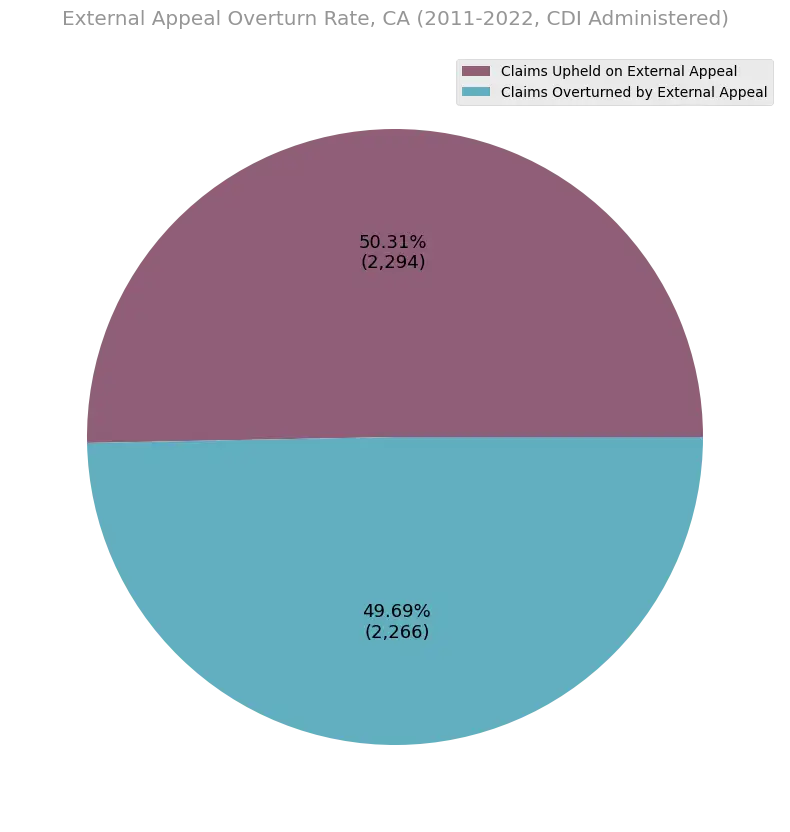
And, in the past few years, those appeals have become more successful.
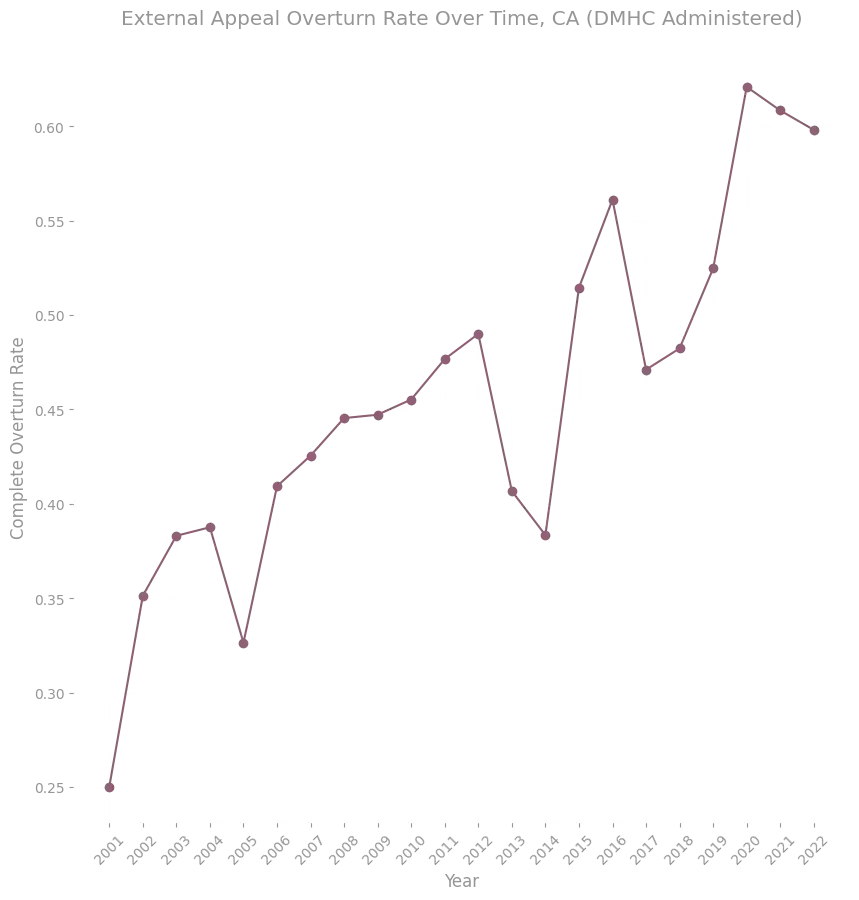
But, sometimes, as with this UHC-insured patient, litigation is necessary (he won, because the lawsuit discoved 'cut-and-paste' denials, as well as much fibbing on UHC's part).
So, when you're confronted by corporate DENY-DEFER-DEFEND, demurely fight back. If in no other way, by public shaming. Like this chart which shows the US healthcare is the LEAST cost-effective world-wide while delivering care worse than most nations. Answer, please, why Canadians, our closest nation when it comes to diet, economy, environment, and working conditions, live five years longer than we do, despite radically cheaper healthcare?

Maybe we need to remove private equity from healthcare?
More evidence: The US & its subjects paid nearly 5 T-for-trillion dollars for healthcare in 2023.

A shortlink to this post: https://tinyurl.com/hc-denials
Comments